


News Bites
Flamingo Roundup
When the Sacramento Zoo recently held its annual flamingo roundup, a handful of local media including KCRA 3, Capital Public Radio, Fox 40, CBS 13 and the Sacramento Bee showed up for the event. The roundup ensures that the flamboyance of 51 Caribbean flamingos—as these bird flocks are called—receives thorough health checks from the zoo’s veterinary team, with the help of students and residents from the UC Davis Weill School of Veterinary Medicine. The birds receive immunizations, eye and feet exams, and bloodwork to ensure their health and well-being in carefully timed procedures to minimize stress. Ages within the flock range from chicks hatched last year to a 57-year-old male, considered to be geriatric for the species.
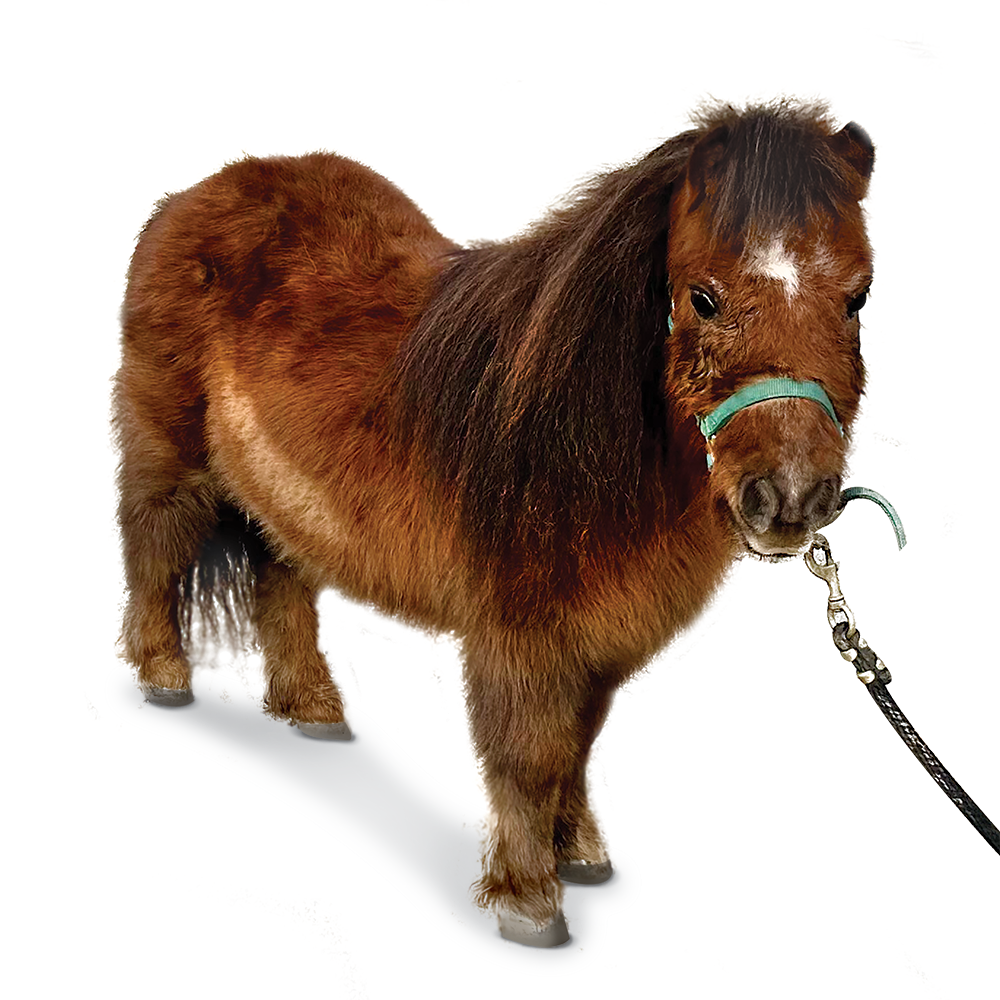
Mini Horse, Big Media Sensation
Big Chief, a 20-year-old miniature horse, became a social media darling after his successful colic surgery at the school’s William R. Pritchard Veterinary Medical Teaching Hospital. The gelding had been found upside down on the ground and unable to stand. While the mini horse with a big personality had historical issues with colic, the bouts were always minor, as he responded well to medication. But this time was different. He wasn’t responding. Knowing Big Chief’s history, his primary veterinarian referred him to UC Davis where equine surgeon Dr. Sandra Valdez and equine surgery resident Dr. David Orozco-Lopez took the lead.
With the help of the Anesthesia Service and highly experienced technical staff members, the surgeons discovered a large colon obstruction caused by three trichobezoars or gastrointestinal masses caused by an accumulation of ingested hair (often from chewing tails or manes), sand, rocks, or other minerals from the ground. All three obstructions were removed through a large colon enterotomy—a surgical incision into the large intestine. Big Chief’s recovery went smoothly, and he returned home to his herd mates, Dex and Little Cloud.
His success story was the school’s most popular Facebook post in the first quarter of 2026.
Rankings Recognize Global Leadership

The school’s continued global leadership was recognized in rankings released by Quacquarelli Symonds, or QS, in March. UC Davis placed second in the world in veterinary science and first in the nation. QR is considered one of the most influential international authorities on university rankings.
Since veterinary science was added to the rankings in 2015, UC Davis has been first in the world five times and is No. 2 for a seventh time. The rankings consider reputation among academics, reputation among employers, the citations and impact of academic papers from a university, and the diversity of a university’s international research network.
The school also secured the top spot in the nation in the 2026 U.S. News & World Report rankings of professional and graduate programs, marking its 10th consecutive year as No. 1.
Where Science Meets the Herd

What does the world look like to a cow and why do goats spook so easily? New tools are helping people experience how livestock perceive and respond to their surroundings—leading to safer, lower-stress handling for animals and the people who raise them.
UC Davis researchers and veterinarians are bringing these tools to ranchers and others, showing how understanding animal behavior improves welfare in real-world settings. In this episode of Unfold, a UC Davis podcast, we explore where
science meets the herd.

New Podcast Explores Pet Health Topics
The school launched a new science-driven weekly podcast called “The Vetrospective.” Hosted by Dr. Michael Kent, it features conversations with experts on important topics in pet health such as genetics, first aid, fleas and nutrition. The podcast’s name represents the show’s goal to present educational health subjects to pet owners from a veterinarian perspective. Client Danae Unti volunteers to help produce and direct the podcast. Her marketing experience with her family’s winery has been vital to the process and her viewpoint as a client has been valuable in selecting show themes. Unti’s goal is to break down cutting-edge science into thoughtful, practical care for the modern pet advocate.
Episodes can be downloaded wherever podcasts are available.