


Impacts of Federally Funded Research
Federal research funding translates scientific inquiry into real life impact. Funding means monitoring and protecting species against pandemics, ensuring safe food for families, and discovering life-saving treatments for animals and humans.
For more than 70 years, the U.S. government has supported academic research, establishing this country as a powerhouse in innovation and technology. You likely benefit from that research without even knowing it—when you need a medical exam, or you are buying vegetables at the grocery store, or when you take your pet to a veterinary appointment.
It has been estimated that since 1950, every dollar of government research spending has generated $3 in economic returns. UC Davis estimates the economic impact of its research in California alone at $2 for every dollar in federal grants.
But since the beginning of 2025, the synergies between universities and the federal government in ensuring a productive research enterprise have been disrupted. At UC Davis, dozens of grants and awards ranging from agriculture to Alzheimer’s disease have been terminated or delayed. While many have been reinstated following appeals or court action, others have not, entire programs have been cancelled at federal agencies, and great uncertainty remains.
Disinvestment in fundamental research has long-term consequences. Major challenges, such as preventing future pandemics, feeding the world and keeping our environment healthy, are at risk of going unaddressed.
These are just a few examples of impactful research through the UC Davis Weill School of Veterinary Medicine made possible by federal funding.
1. Highly Pathogenic Avian Influenza
When northern elephant seals tested positive for highly pathogenic avian influenza (HPAI) H5N1 in February at California’s Año Nuevo State Park, it didn’t come as a surprise to Professor Christine Kreuder Johnson. In fact, a collaborative research team from UC Davis and UC Santa Cruz had been monitoring elephant seals along California’s coastline since 2024, dreading the appearance of the virus that had decimated the southern elephant seal population in Argentina the year before.
“We most likely identified the very first cases of the HPAI outbreak cluster in marine mammals at the reserve because of coordinated teams that have been on high alert with active surveillance for this disease for some time,” said Johnson, director of the Institute for Pandemic Insights at the UC Davis Weill School of Veterinary Medicine. Johnson and her team, including dual degree veterinary graduate student Elizabeth Ashley, increased disease surveillance of marine mammals and seabirds in recent years due to concerns about avian influenza’s spread throughout North and South America. Coordinated state and federal funding have made this work possible to date.
The Año Nuevo reserve, just north of Santa Cruz, is home to an elephant seal colony with approximately 5,000 seals during the winter breeding season. About 1,350 seals were present on the beach when the outbreak began. This particular colony has been closely monitored for six decades by UC Santa Cruz researchers—to study the unique features of northern elephant seal physiology, behaviors, and population recovery. The researchers’ familiarity with the colony provides a unique opportunity to investigate the outbreak in individually identifiable seals and understand the potential near and long-term impacts to population health.
“Given the catastrophic impacts observed in related species, we were concerned about the possibility of the virus infecting northern elephant seals for the first time, so we ramped up monitoring to detect any early signs of abnormalities,” said Roxanne Beltran, a professor in Ecology and Evolutionary Biology at UC Santa Cruz. Her lab leads UC Santa Cruz’s northern elephant seal research program at Año Nuevo.

Weekly sampling activities initiated by UC Davis and UC Santa Cruz at Año Nuevo Reserve revealed sporadic infections in wild seabirds in January and the first cases of HPAI in northern elephant seals on February 12. On February 19 and 20, Beltran’s team noticed a cluster of seven seals with abnormal respiratory and neurological signs, including weakness and tremors indicating an outbreak was underway. Expedited testing at the UC Davis California Animal Health and Food Safety Laboratory System revealed the samples were positive for avian influenza, which the USDA’s NVSL lab later confirmed as HPAI H5N1.
California State Parks temporarily closed public access to seal viewing areas and cancelled its popular guided elephant seal tours for the remainder of the season while scientists investigated the wildlife health threat. Moves into Marine Mammals in California
Looking Back and Ahead
The H5N1 virus was discovered in 1996 in Southeast China on a domestic goose farm. It was transmitted within the poultry industry for several years, during which it spilled over into wild birds and humans and then spread to Europe, the Middle East, Africa and later to North America, South America and, in early 2024, to Antarctica.
The current outbreak of HPAI in North America was first detected in early winter 2021 in Newfoundland and Labrador, Canada. It has now been confirmed in nearly all U.S. states and Canadian provinces, in commercial poultry, backyard flocks, many species of wild birds, and several species of mammals, including humans.
Two previous HPAI outbreaks in U.S. marine mammals occurred in Maine in 2022 and Washington in 2023. These events were caused by direct spillover of virus from infected birds to seals.
Advancing Surveillance

“Sustained wildlife surveillance and monitoring is a critical but ongoing challenge for preventing and detecting outbreaks globally,” Johnson emphasized. “HPAI is just one example of a virus that has the capacity to greatly impact not only animal and human health, but agricultural economies such as egg and dairy production. Federal funding has been vital to our ability to conduct surveillance and rapidly respond to outbreaks before they become catastrophic pandemics.”
The NSF Institute for Pandemic Insights at UC Davis, with collaborators at 12 other institutions, including The Marine Mammal Center and UC Santa Cruz, has been working with engineering colleagues across campus to develop innovative technologies and methodologies—from chemical sensors to drones—to be able to scale up HPAI surveillance, especially in populations that are less monitored and often harder to access.
UC Davis generated weekly situation updates and continues to closely monitor marine wildlife and test samples collected from sick animals to ensure systematic observations. As of press time, 57 northern elephant seals, six California sea lions and one southern sea otter have been documented with HPAI H5N1 as part of this outbreak cluster. Johnson’s team is also investigating additional cases in sensitive marine mammal species throughout California in collaboration with the California Department of Fish and Wildlife’s Marine Wildlife Veterinary Care and Research Center, The Marine Mammal Center, and NOAA Fisheries West Coast Marine Mammal Stranding Network. Continued funding will be critical to these ongoing efforts and ramped up surveillance in anticipation of new outbreaks in the coming months.
—UC Davis News and Trina Wood
2. One Health Insight into Disease
Many people, when they hear of a tick-borne disease, immediately think of Lyme disease. But there is another tick-transmitted disease known as Rocky Mountain spotted fever (RMSF) that is becoming increasingly prevalent across the Americas. Professor Janet Foley and other researchers describe this growing threat as “a wolf at the door” because Rhipicephalus sanguineus—the brown dog tick and primary vector for RMSF—thrives in urban environments rather than wilderness areas. This tick commonly infests homes, yards, and kennels, putting dogs and their human families at risk even in cities and towns.
Since the early 2000s, RMSF has reemerged in northern Mexico with at least 9,152 human cases and case mortality up to 50%. These cases are more prevalent where people are impoverished and have marginal access to medical care. Data on RMSF in dogs are sparse, although dogs are sentinels for human risk. The presence of roaming dogs in neighborhoods is associated with human cases, tick abundance, and canine seroprevalence (proportion of a population that tests positive for specific antibodies in their blood serum, indicating past exposure to a virus, infection, or vaccination).
RMSF is responsible for more fatalities than any other tick-borne disease in North America. In both dogs and people, disease ranges from mild to severe to fatal; early signs are often flulike in nature. The range of disease severity may be related to infectious dose, specific bacterial strain, innate susceptibility, and pre-existing chronic conditions, as well as socioeconomic and health/ veterinary care access factors. Affected people may report considerable pain in joints, the chest, the abdomen, and the head. While these signs are difficult to assess in veterinary patients, lethargy and lameness are reported in many cases. Some dogs also present with anorexia, vomiting, and diarrhea. The “spotted fever” moniker is derived from the rash that often occurs.
Dogs are the perfect One Health partner in the fight against RMSF. They are susceptible and suffer the same disease as people and ... act as sentinels for the disease.”
—Professor Janet Foley
In 2024, the Sacramento-Yolo Mosquito and Vector Control District detected a brown dog tick infestation in a South Sacramento neighborhood that encompassed three adjoining properties. This infestation was unusual due to its location farther north than those in most recent reports. Thanks in part to federal funding, Foley and other researchers with the Laboratory of Infectious Disease Ecology at UC Davis were able to collaborate with Sac-Yolo vector control to implement a surveillance and abatement program. This included tick monitoring, residual spraying of acaricide, deployment of tick collars on dogs and bilingual public outreach.
“Dogs are the perfect One Health partner in the fight against RMSF,” Foley said. “They are susceptible and suffer the same disease as people and, through their close association with humans, act as sentinels for the disease.”
However, dogs also contribute to the epidemiology of the disease if they carry brown dog ticks. Multiple ticks can transmit Rickettsia rickettsii, the bacterial organism which causes RMSF. Ticks carried by dogs through their environments can then pass the infection on to other dogs or people. Experimental studies document rickettsemia of 3 to 13 days in dogs, the window of time in which ticks can acquire the infection.
Due to huge infestation burdens, a single infected tick has the capacity to infect large numbers of dogs. Numerous epidemiological studies highlight that the presence of owned and unowned roaming dogs in neighborhoods is associated with increased human case rates, canine seroprevalence, and tick abundance.
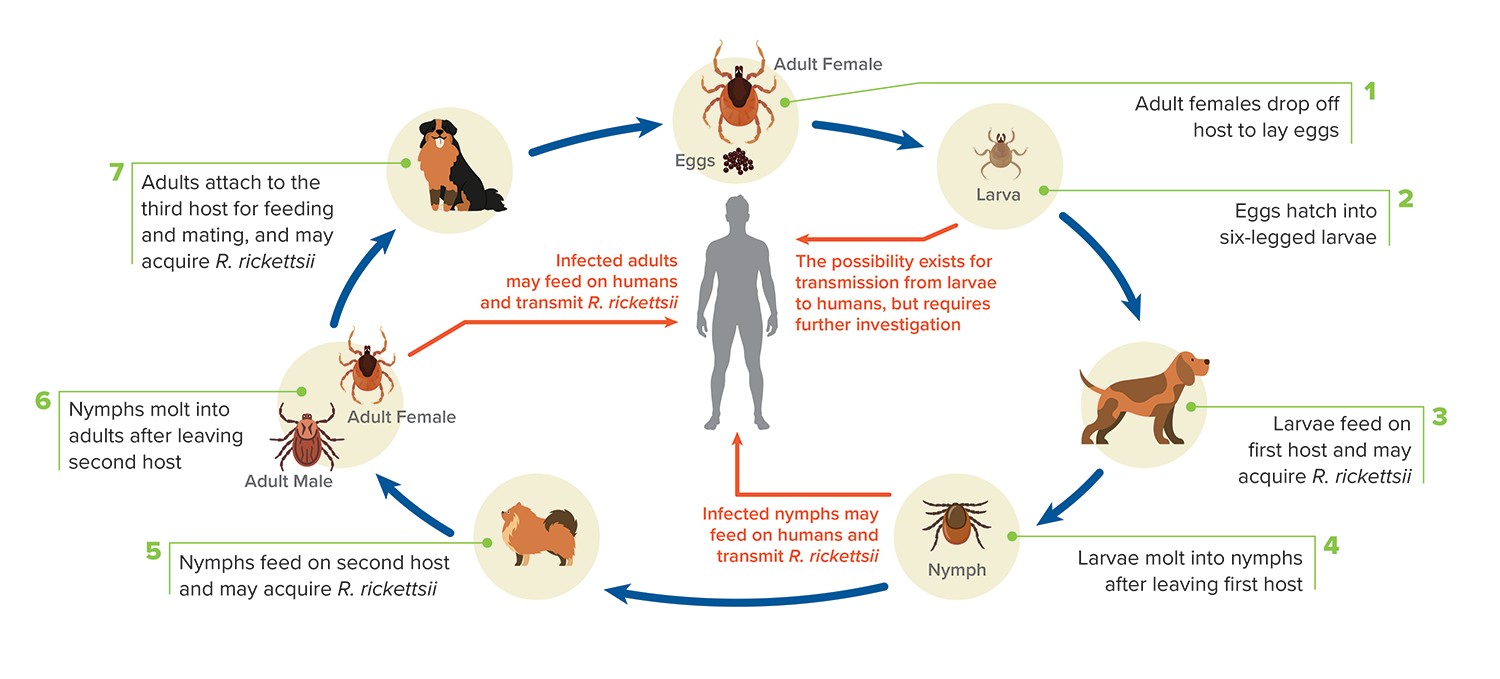
“Distribution of ticks and tick-borne diseases are changing all the time, and it’s getting worse with climate change,” Foley said. “That, together with the incredible suffering that humans and other animals can experience due to tick-borne disease emphasizes how important it is to continue high impact and careful research.”
In a Currents for One Health article in the Journal of the American Veterinary Medical Association, Foley and Drs. Andrés M. López-Pérez and Laura Backus emphasized that veterinarians serve as crucial frontline defenders against RMSF through early detection and treatment, potentially saving both canine and human lives. While RMSF is encountered less frequently in veterinary practice than other tickborne diseases, its severity and public health implications make its recognition and management extremely important.
“Rarely is only a single home infested, so entire neighborhoods, villages, and sometimes cities are involved,” they wrote. “Campaigns against brown dog ticks and the diseases they spread require a multi-pronged approach. Many of these approaches are specifically suited to veterinarians and other One Health professionals who have valuable insights into herd health and can help create healthy environments for dogs and people.”
—Trina Wood
3. Growing Importance of Aquaculture
As the world’s fastest growing food production sector, aquaculture plays a vital role in feeding a global population. Ensuring the health of cultured fish species not only supports food security and the aquaculture economy but protects wild fish and reduces potential health risks to humans.
That’s where Cailin Karotkin’s research comes in. A DVM student in the Class of 2028, Karotkin received a prestigious Veterinary Student Research Fellowship from the federally funded Foundation for Food and Agriculture Research in 2025. As one of only 16 international FFAR Vet Fellows, Karotkin explored a novel method of preventing lactococcosis outbreaks in rainbow trout, one of the most important cultured fish species in North America.

In the past decade, lactococcosis has become one of the deadliest infectious diseases in U.S. aquaculture, causing significant fish mortality and economic losses for producers and conservation programs. Few tools are available to prevent or treat the disease, which can be caused by several Lactococcus bacteria. The organisms cause a systemic infection with signs such as bulging eyes with hemorrhaging, abdominal swelling, dark skin, and lethargic or erratic swimming. Salmonids, like Rainbow trout, are particularly threatened by the disease.
A particularly harmful strain of the bacteria, Lactococcus petauri, showed up for the first time in California in 2020. It was initially misidentified as L. garvieae, which isn’t as fatal. In July of that year, three California Department of Fish and Wildlife hatcheries in Southern California and the eastern Sierra had to euthanize 3.2 million hatchery trout to stop the bacterial outbreak.
Under the mentorship of Dr. Esteban Soto, Karotkin undertook a 57-day vaccination study treating 270 fish twice daily as a project under the Students Training in Advanced Research program. She launched the study just five days after completing her first year of veterinary school. Karotkin explored the use of adding two harmless, yet closely related bacteria as “pro-biotics” to feed and water supplies to establish whether this could stimulate the fishes’ immune systems against L. petauri infection and establish a safe, long-lasting and easy-to-use method to prevent lactococcosis outbreaks. Her research could help protect farmed and wild fish, reduce potential health risks to humans, and support both food security and the aquaculture economy.
The FFAR Vet Fellows program launched in 2019
Former UC Davis fellows include:
- Kimberly Aguirre, Class of 2027, awarded in 2024
- Katherine Choo, Class of 2026, awarded in 2024
- Maia Laabs, Class of 2022, awarded in 2020
- Cara Newberry, Class of 2022, awarded in 2019
Karotkin’s results support further work on the use of alternate immunization protocols for disease prevention in aquaculture. She plans to submit her research study for publication in the Journal of Aquatic Animal Health and presented the research at two conferences, winning an award for the 2nd best poster presentation at the One Health symposium in 2025.
“This funding allowed me to pursue a project that really matters to me, because it has the potential to improve fish health on a broader scale through unique vaccination methods that are less stressful and more practical for fish in aquaculture,” Karotkin said. “This is why federally funded research is so important—it provides us the chance to investigate questions that connect animal health to larger issues like sustainable aquaculture, food security, and the impact of climate change on fish (Lactococcosis and other fish diseases are becoming more common as the water temperatures rise, which many pathogenic bacteria thrive in). I'm very grateful to FFAR and Dr. Soto for this opportunity that also gave me a chance to explore career paths I may not have otherwise known about which has been really exciting.”
—Trina Wood